


Bike and Barge
Venice Lagoon & hidden Veneto–Friuli Canals
from Venice to the Gulf of Trieste

- IT419 / Italy
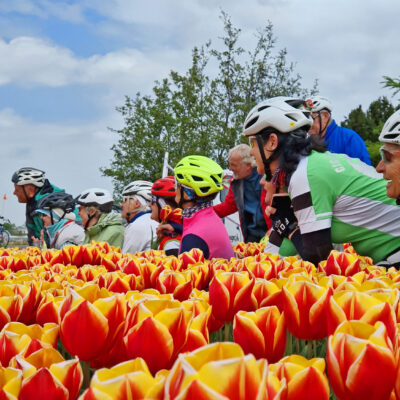
- Bike and Barge Bike and barge In the daytime by bike, in the evening on board a hotel-boat that follows the cyclists along the route. Your luggage stays in the cabin and you can stay on the boat if you don't feel like cycling. Details
- Self-guided or guided Self-guided or guided This tour offers the choice of cycling alone using our App (with maps, roadbook, points of interest and GPS tracks) or with the whole group following the tour leader.
-
Bronze
Silver
Gold
Platinum
Bronze
Silver
Gold
Platinum
Comfort and accommodation
Four levels of comfort to describe the different types of accommodation.
Find out more about comfort on this trip under comfort and departures.
- 8 days
-


- linear from Venice to the Gulf of Trieste
- Original tour Original tours These are the trips we organise from A to Z to provide you with the best service at the best price. Details
Are you interested in other variants of this trip?
Venice Lagoon
self-guided tours
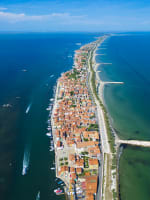
Venice and its islands, from beach to beach
Bike and Barge / self-guided / 8 days
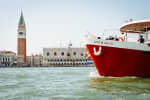
From Mantua to Venice
Bike and Barge / self-guided / 8 days

Bolzano-Verona-Venice
Cycling / self-guided / 8 days
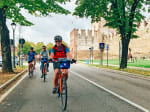
Lake Garda to the Venice lands
Cycling / self-guided / 6 days

From Venice to Vicenza 5 days
Cycling / self-guided / 5 days

Venice lands 8 days
Cycling / self-guided / 8 days
To know
Travelling as a larger group?
Highlights
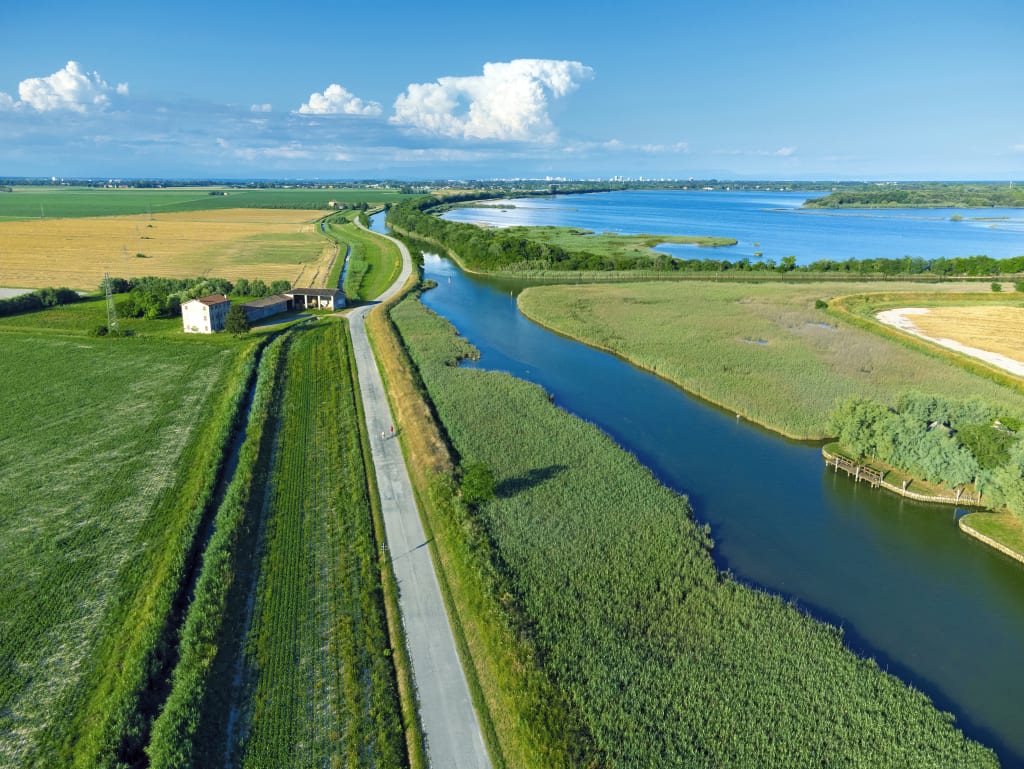
A brand new bike and barge tour along the Litoranea veneta, the navigable waterways between the Venice lagoon and the Gulf of Trieste. You have the chance to visit this area in a gentle and sustainable way, in contact with nature, the colors of the lagoon, and the smell of the sea. From the colorful island of Burano to the ancient Roman ruins of Aquileia, and from the lagoon of Caorle to the historic port city of Trieste, you might have heard about these places from the books of Hemingway, who was fascinated by this landscape suspended between land and water. Here, you can experience the life that still follows the rhythms and traditions of rural Veneto and Friuli-Venezia Giulia, much as it did a century ago.
- The lagoon islands, the little seaside town of Caorle, and Grado
- Traditional on-board cuisine, featuring local recipes with fresh ingredients
- Fishermen and local farms, still working as they have for generations
What awaits you
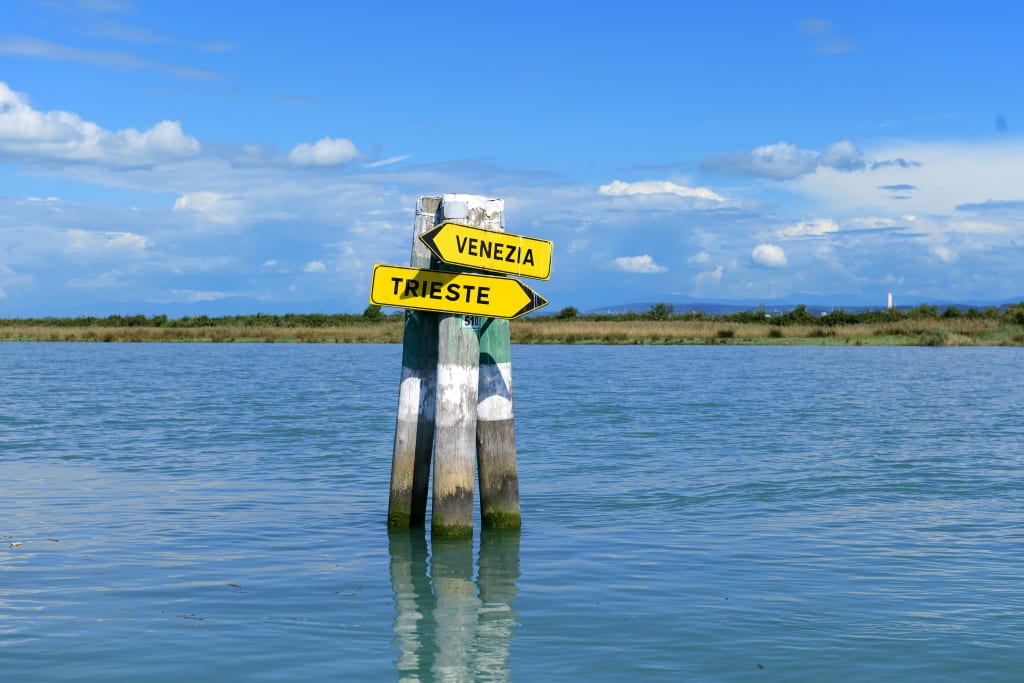
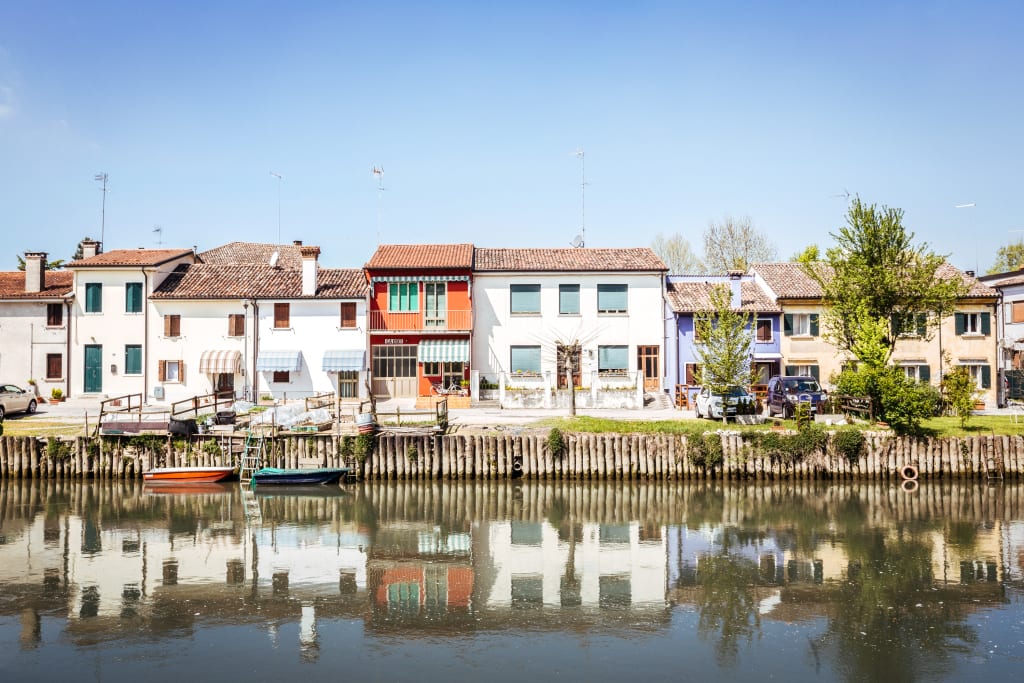
This navigation follows the Litoranea Veneta, a 130 km waterway connecting the Venice lagoon to the Gulf of Trieste. Built by the Venetians in the 1400s to transport goods, it runs along the coast and today plays a key role in protecting the area from high water and future flooding.
The bike stages are mainly flat, on paved bike paths along...
moreThis navigation follows the Litoranea Veneta, a 130 km waterway connecting the Venice lagoon to the Gulf of Trieste. Built by the Venetians in the 1400s to transport goods, it runs along the coast and today plays a key role in protecting the area from high water and future flooding.
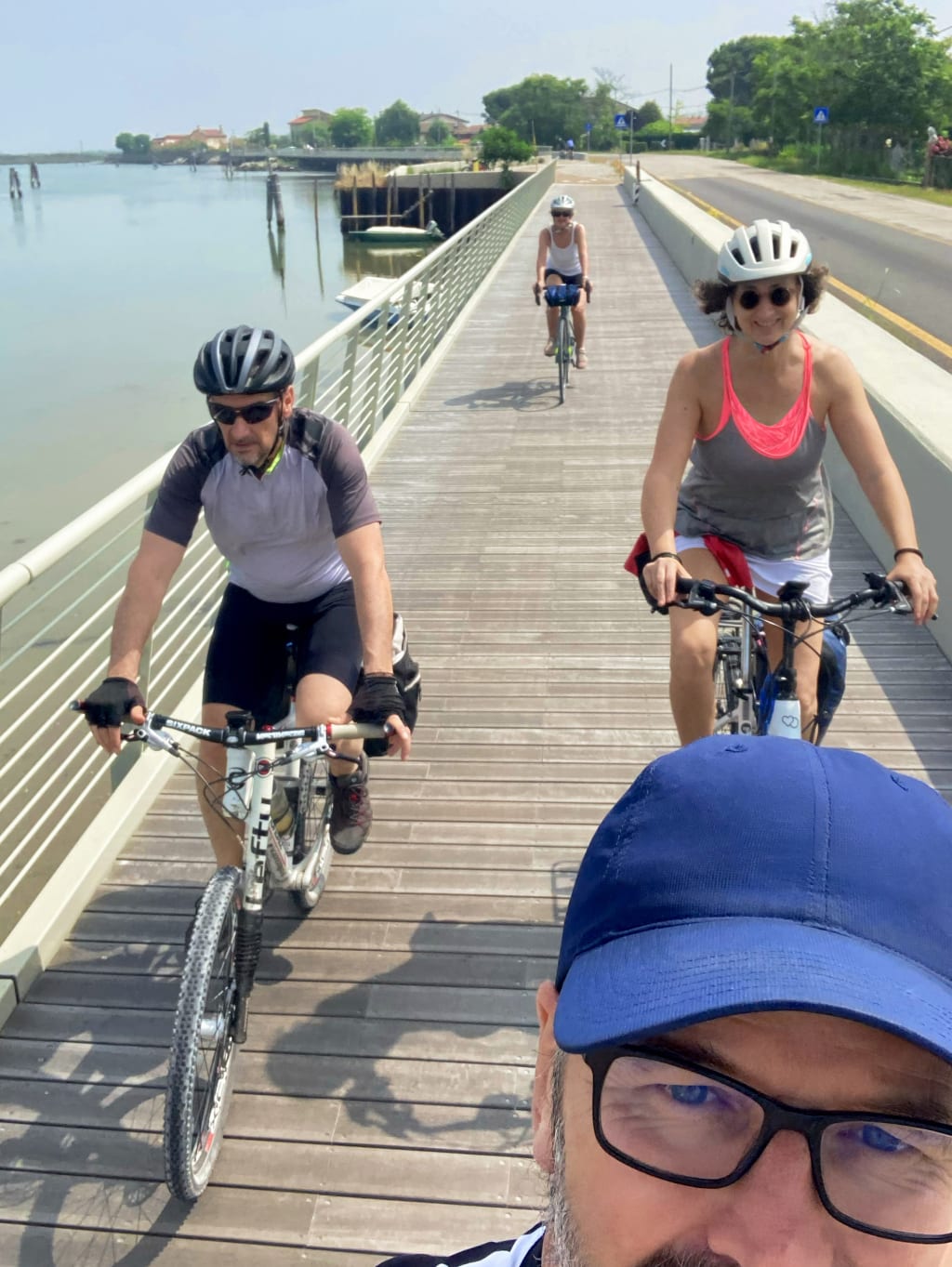
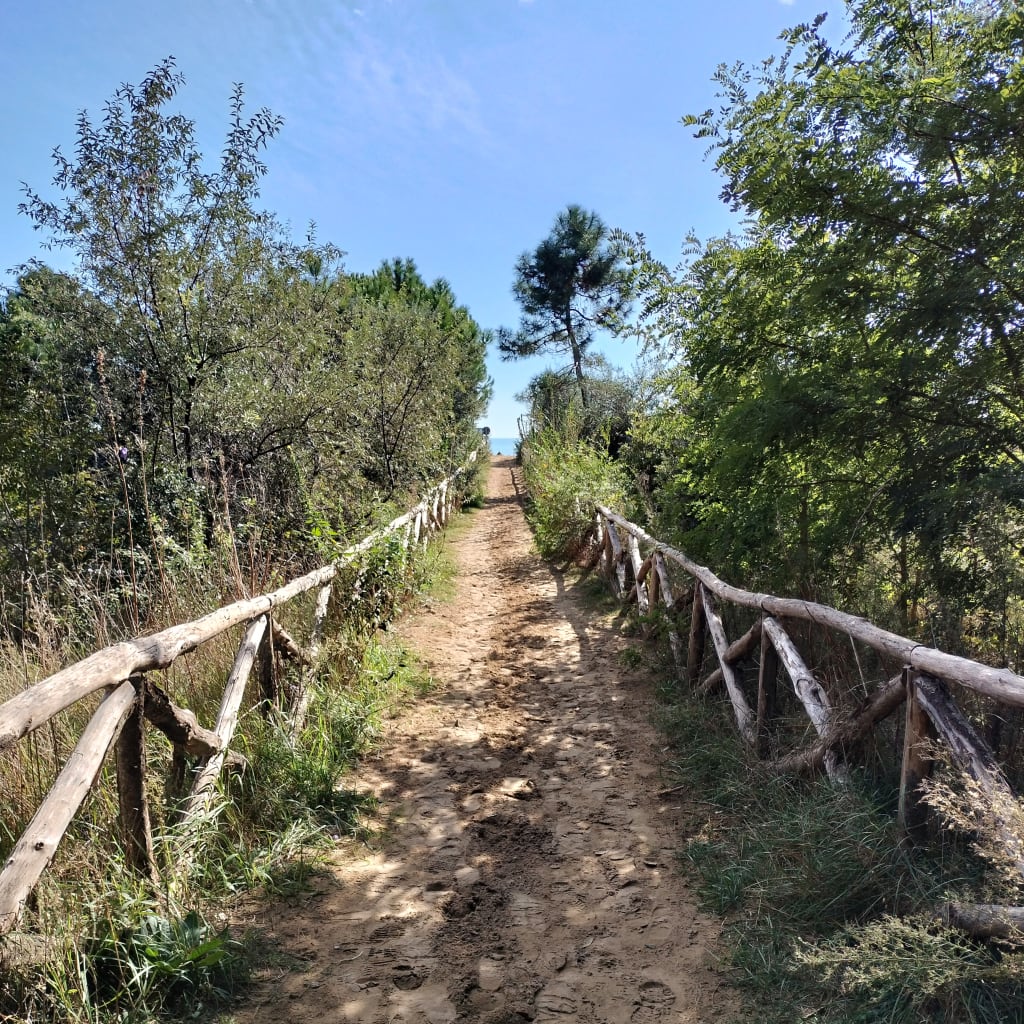
The bike stages are mainly flat, on paved bike paths along rivers and canals, or on quiet country roads.
The boat is moored at night and usually moves after breakfast. Some parts of the route take place by boat, to allow easier access to the bike paths or simply to enjoy the sailing.
This tour can either be self-guided or guided: choose to cycle at your own pace using our detailed App, or with the whole group following the tour leader.
Accommodation
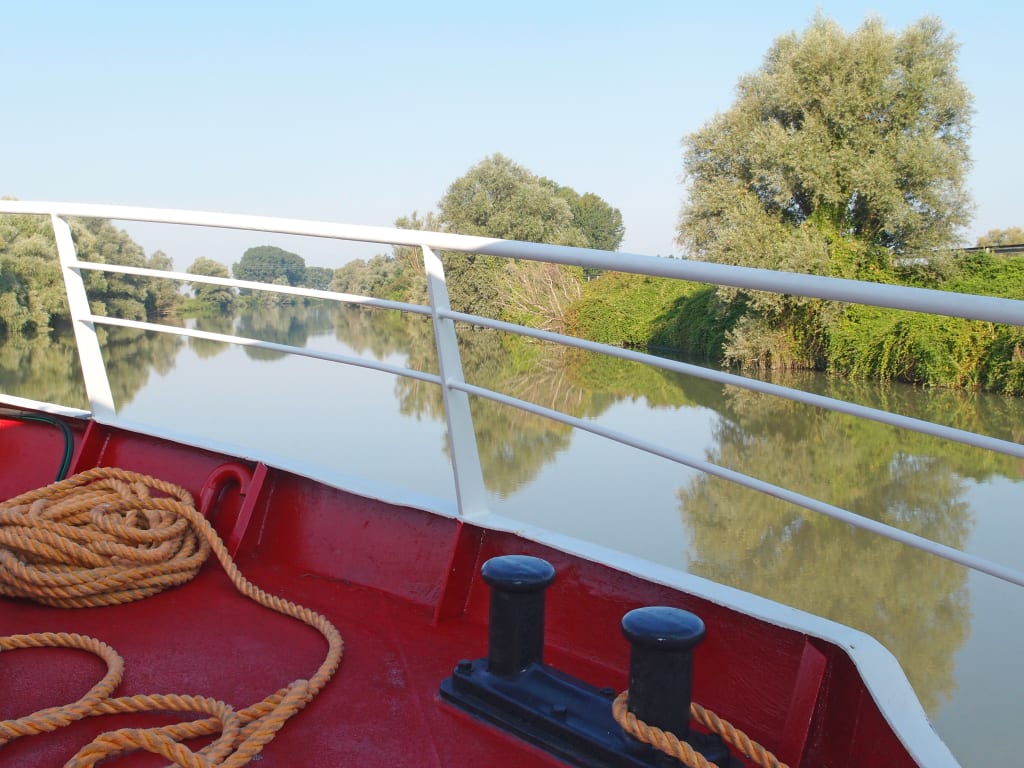
7 overnights aboard a riverboat: a real floating hotel ready to follow you during the biking stages and welcome you aboard in the evening. The atmosphere is comfortable and is designed down to the smallest detail to ensure you have an unforgettable stay. At dinner and in moments of relaxation, our chefs accompany you in a whirlwind of flavors...
more7 overnights aboard a riverboat: a real floating hotel ready to follow you during the biking stages and welcome you aboard in the evening. The atmosphere is comfortable and is designed down to the smallest detail to ensure you have an unforgettable stay. At dinner and in moments of relaxation, our chefs accompany you in a whirlwind of flavors and aromas, taking care of the preparation of traditional local dishes, while the crew, who live and work in the area, have in-depth knowledge of the territory and its customs. Cabins have private bathrooms and air conditioning.
Find out who we are
If you’re here, you’re probably curious about Girolibero and why booking a trip with us could be a great choice, even if we haven’t met yet. You might be asking yourself: who are we? Why choose Girolibero? And what if you need a little help along the way? Don’t worry, we’re here to provide all the answers.
Since 1998, we’ve been organizing bike tours in Italy and Europe. Every step of your itinerary is planned out precisely; we rely on trusted professionals we’ve worked with for many years to make your trip a reality. We have people selecting your accommodation, while others make the schedule, handle unforeseen circumstances, make our website run smoothly, and maintain all the bikes.
Our headquarters is in Vicenza. We are dedicated to making your vacation a carefree experience, and we are here to address your questions and provide assistance. But there’s more.
Read moreItinerary
1. Arrival in Venice and embarkation
Individual arrival in Venice, with boarding from 5:00 pm. At 6:00 pm, it is time for the welcome meeting over a refreshing drink. The onboard crew and your tour guide are ready to walk you through the tour and answer any questions. After dinner, first stroll through the centre of Venice.
2. Venetians' vegetable garden Sant'Erasmo and visit to colorful Burano
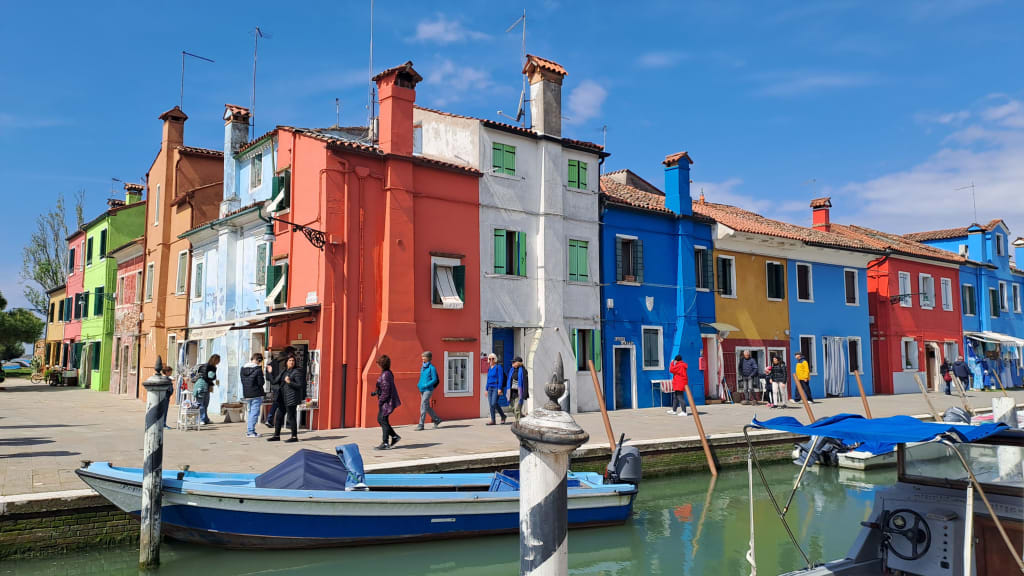
After breakfast, you reach the island of Sant’Erasmo, which is second only to Venice in size. This place is also known as the Venetians’ vegetable garden. Alongside vegetables and various fruit tree cultivations, there are also vineyards, producing a white wine aptly named Orto di Venezia (a tribute to the island). But the true star of the island is the purple artichoke of Sant’Erasmo, a prized crop harvested in spring that also decorates the island in summer with its wonderful purple blooms. A stop at spiaggia del Bacan is a must: enjoy some time on this beach, where locals usually go, before heading by boat to the colourful island of Burano, famous not only for its brightly coloured houses but also for its prized handmade Burano lace.
3. From the lagoon to the mainland: Murano, Punta Sabbioni and San Donà di Piave
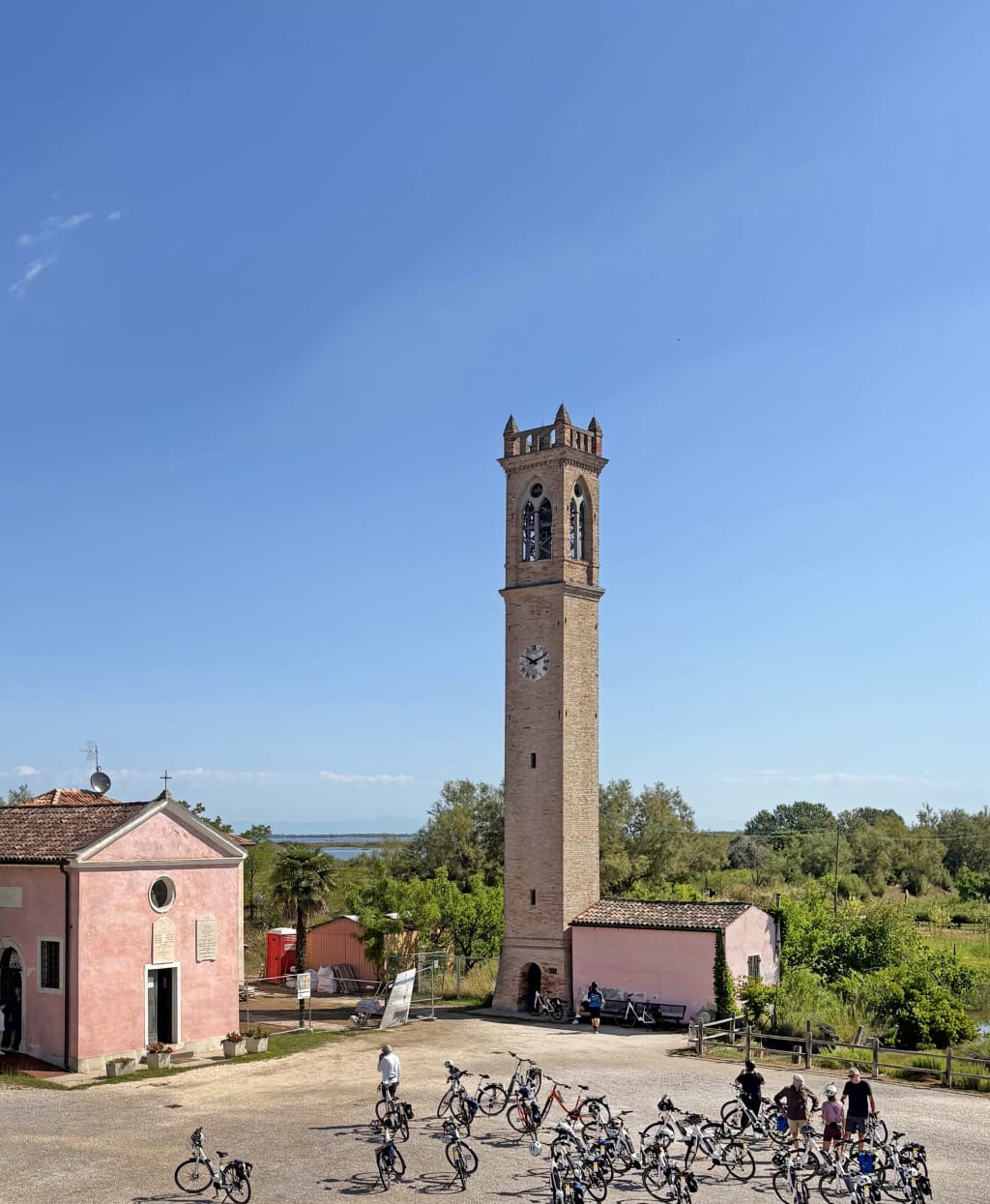
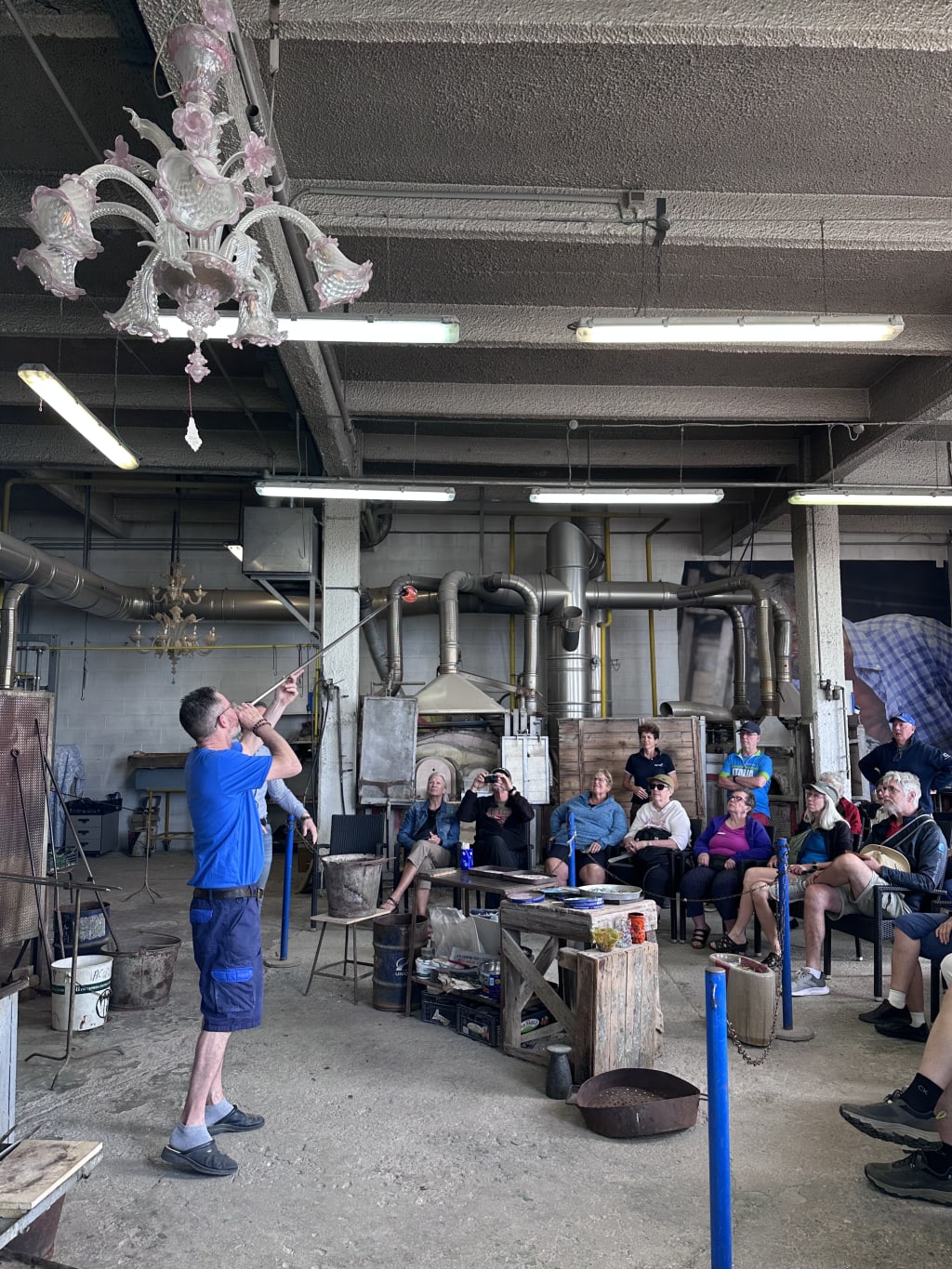
After breakfast, we say goodbye to Venice and sail to Murano, where you have the opportunity to visit a historic glassworks, complete with a demonstration of the centuries-old art of glassmaking. Ave Maria Portegrandi carries us on to Punta Sabbioni, the tip of the Cavallino-Treporti coastline that separates the Lagoon from the sea. Here you cycle through the small islands and canals of Lio Piccolo, a magical lagoon hamlet made up of vegetable gardens and fishing valleys, farmhouses, a beautiful square, a palazzo, a small church and a bell tower: it seems hard to believe that just a couple of kilometres away lies one of Italy’s most famous Adriatic beaches. A short boat transfer from Notturno (a renowned seafood restaurant) takes us to La Barena in Lio Maggiore, a farmhouse that since 1928 has carried on the agricultural tradition of the northern lagoon for generations. Today’s destination is San Donà di Piave, where you can visit the MUB, the land reclamation museum that explains the story of this lagoon territory and the great land reclamation that began back in the mid-1800s. The town lies next to the famous river Piave, the undisputed protagonist during the First World War, which has inspired countless songs, poems and stories. Portegrandi awaits us for dinner.
4. Coastline cycling, tasting in a local farm and arrival in Caorle
Today you cycle along the Piave River, and after a while, finally, the sea appears, with its beach resorts and tourist attractions. The local land still gets its due attention, and the Fagiana farm is a fine example of that: did you know that some excellent carnaroli rice is grown in the Venice area?
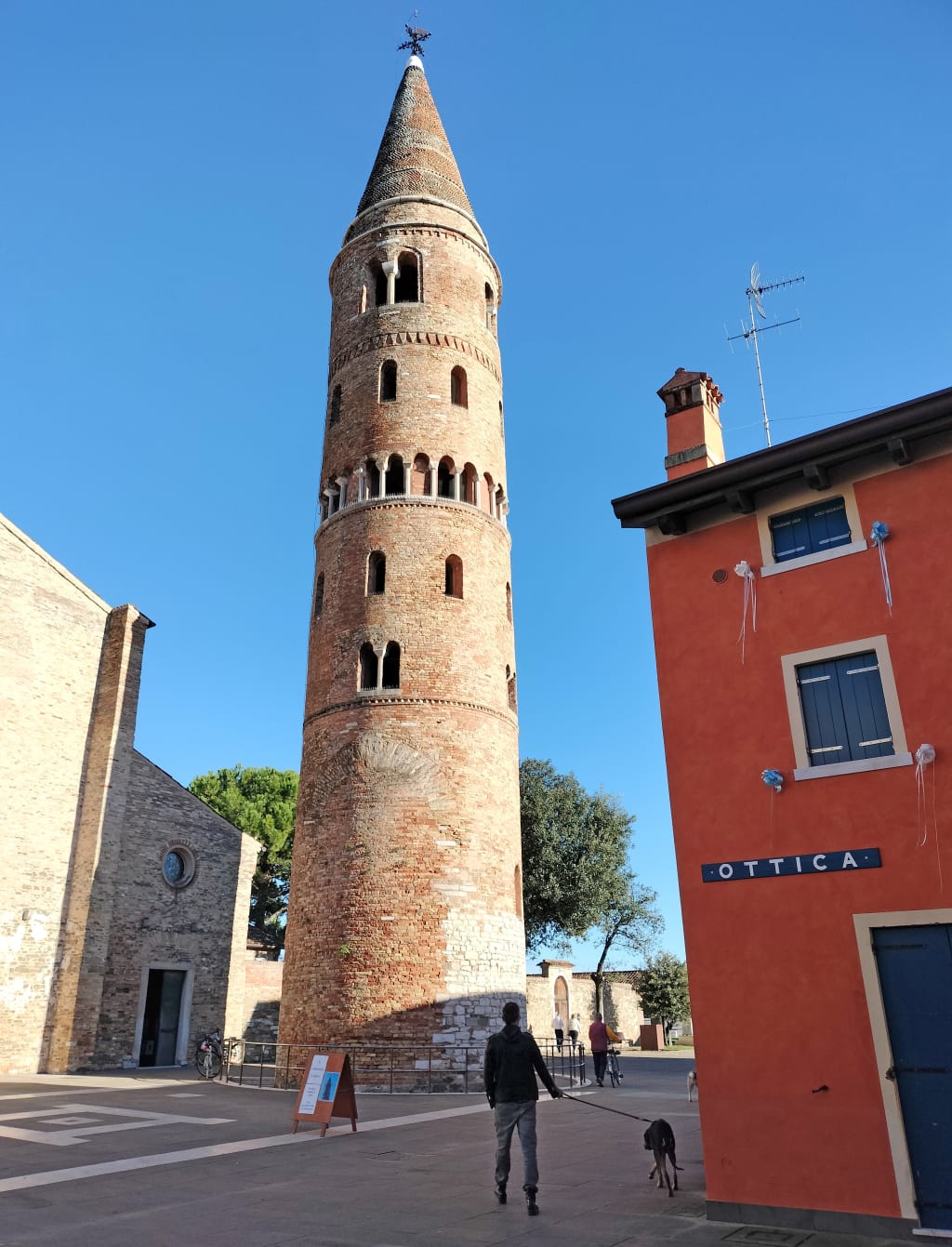
On the horizon you can already spot Caorle, but just a few kilometres before it lies Ca’ Corniani, another rural gem and an example of land reclamation that has turned a lagoon landscape into a thriving agricultural estate. Caorle is a beautiful little seaside town, and its heart is undoubtedly the fishing harbour. Everything here seems built to honour and pray to the sea: the Church of the Madonna dell’Angelo, perched on the cliff, the round bell tower visible from afar, and the brightly coloured houses once home to local fishermen.
5. Brussa natural oasis by bike and arrival in Marano Lagunare
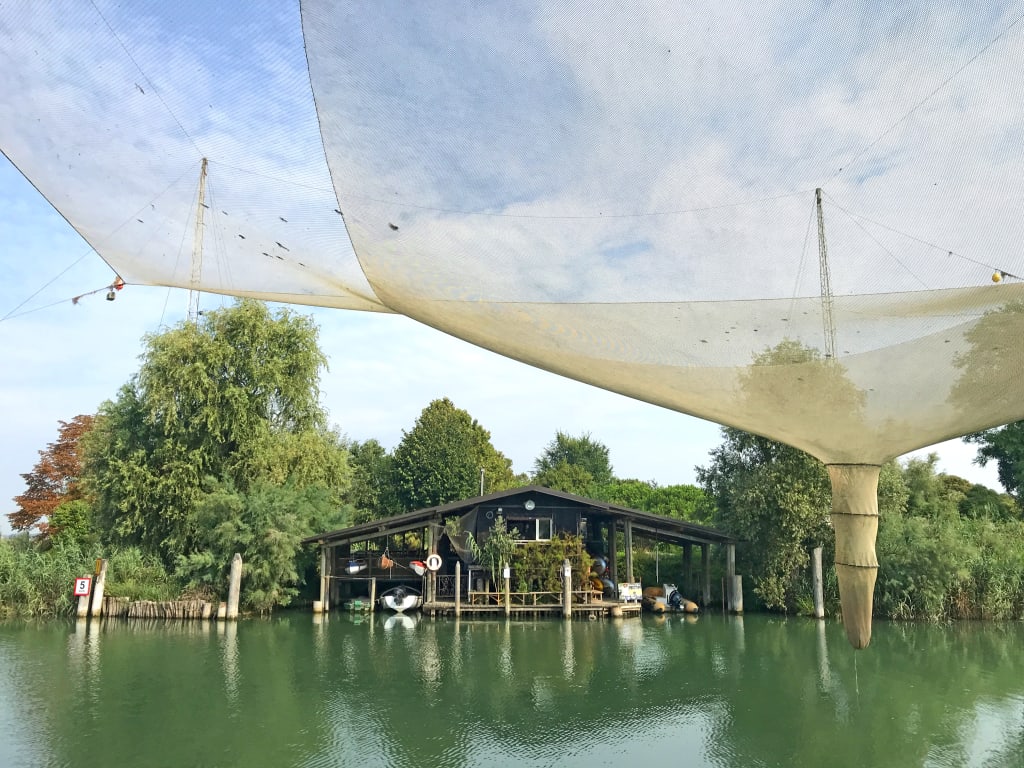
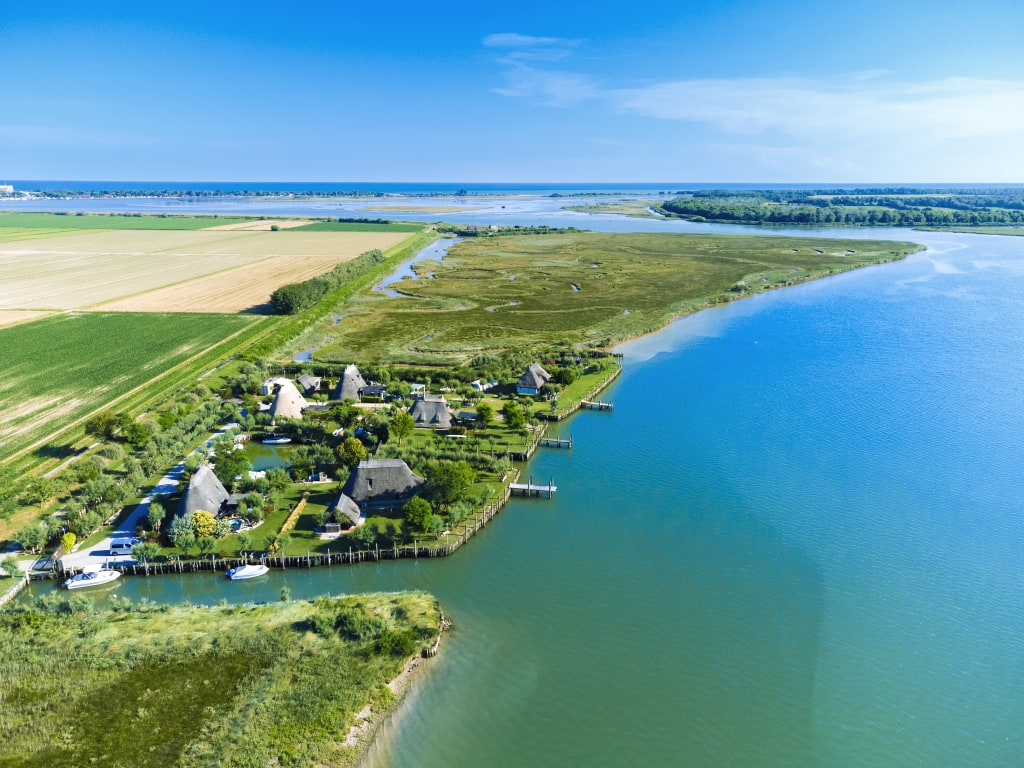
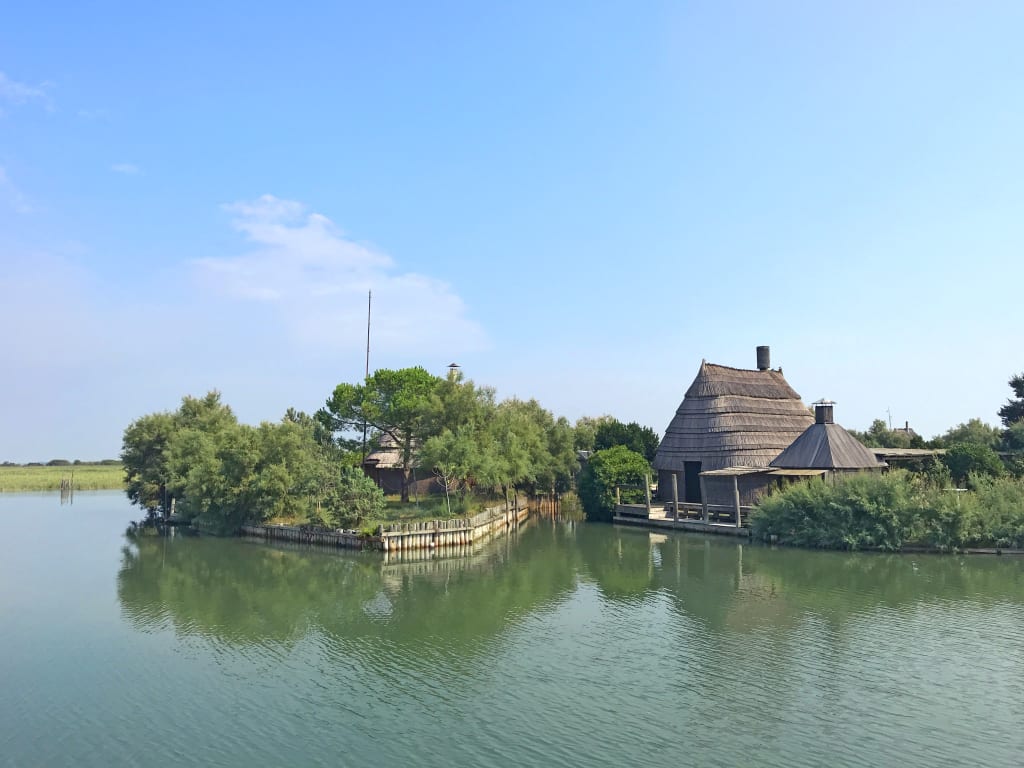
Today’s ride begins and you can already spot some large houses with thatched roofs: these are casoni, typical reed constructions used by local fishermen. They are a symbol of the tradition and culture of these lands, an authentic connection to the past. Keep cycling into Brussa, a wide natural oasis rich in biodiversity, among quiet golden dunes, dense pine forests and cultivated fields. You can also spot fishing valleys, lagoons and brackish reed beds of rare beauty. Along the way, look out for “La Bilancia di Bepi”, a historic fishing stilt house on the Stella River, and stop for a tasty fish-based snack at a fish farm. The barge awaits you in Marano Lagunare, a fascinating town overlooking the lagoon.
6. From the countryside to Grado, the sunny city overlooking the sea
This cycling stage takes you from the countryside to the sea. After passing the medieval village of Strassoldo, you reach Aquileia, a Roman colony founded in 181 BC and now one of the most important archaeological sites in northern Italy. The Roman archaeological area and the basilica, which preserves extraordinary mosaics, have been declared a World Heritage Site. Leaving Aquileia, you cross the Isonzo River, scene of historic battles, and follow its course almost to its mouth, which is home to a nature reserve where white Camargue horses graze. Then you reach beautiful Grado, a city with ancient origins from the Roman era, when it was an important change spot for Aquileia. Its historic center is a real gem, made of narrow streets, colorful fishermen’s houses and lots of traces from its glorious past, like the Basilica di Sant’Eufemia and its mosaic floor, and the Basilica di Santa Maria delle Grazie, the most ancient church of the city.
7. Cycling to Monfalcone, then train to Trieste and a visit to the city
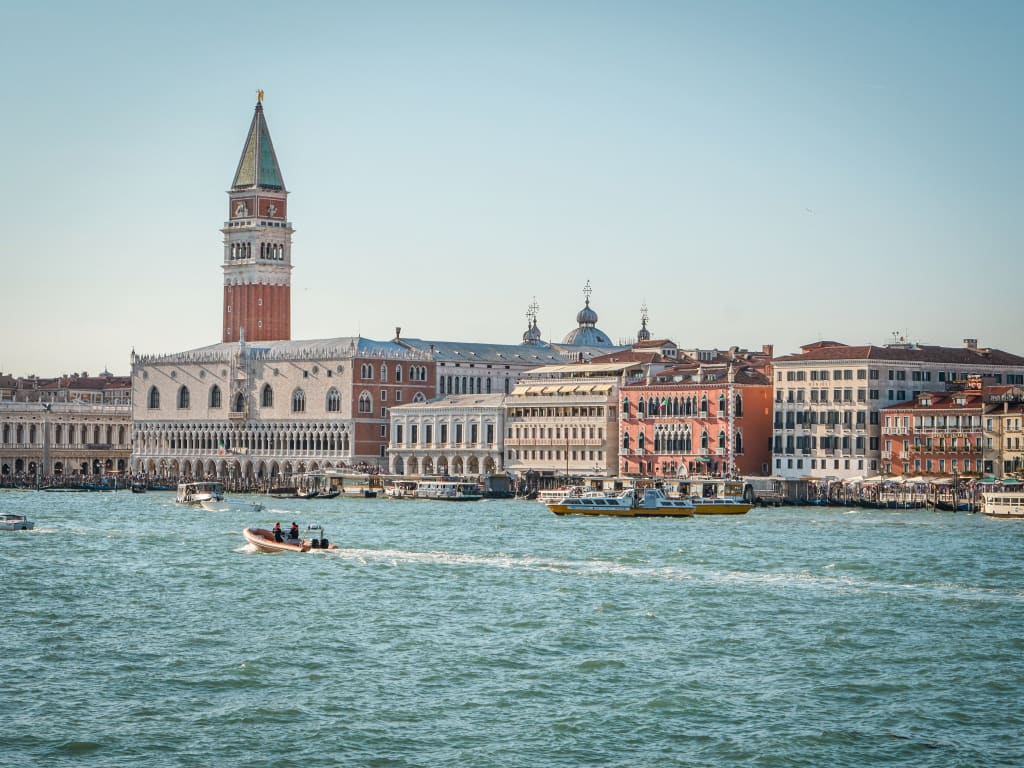
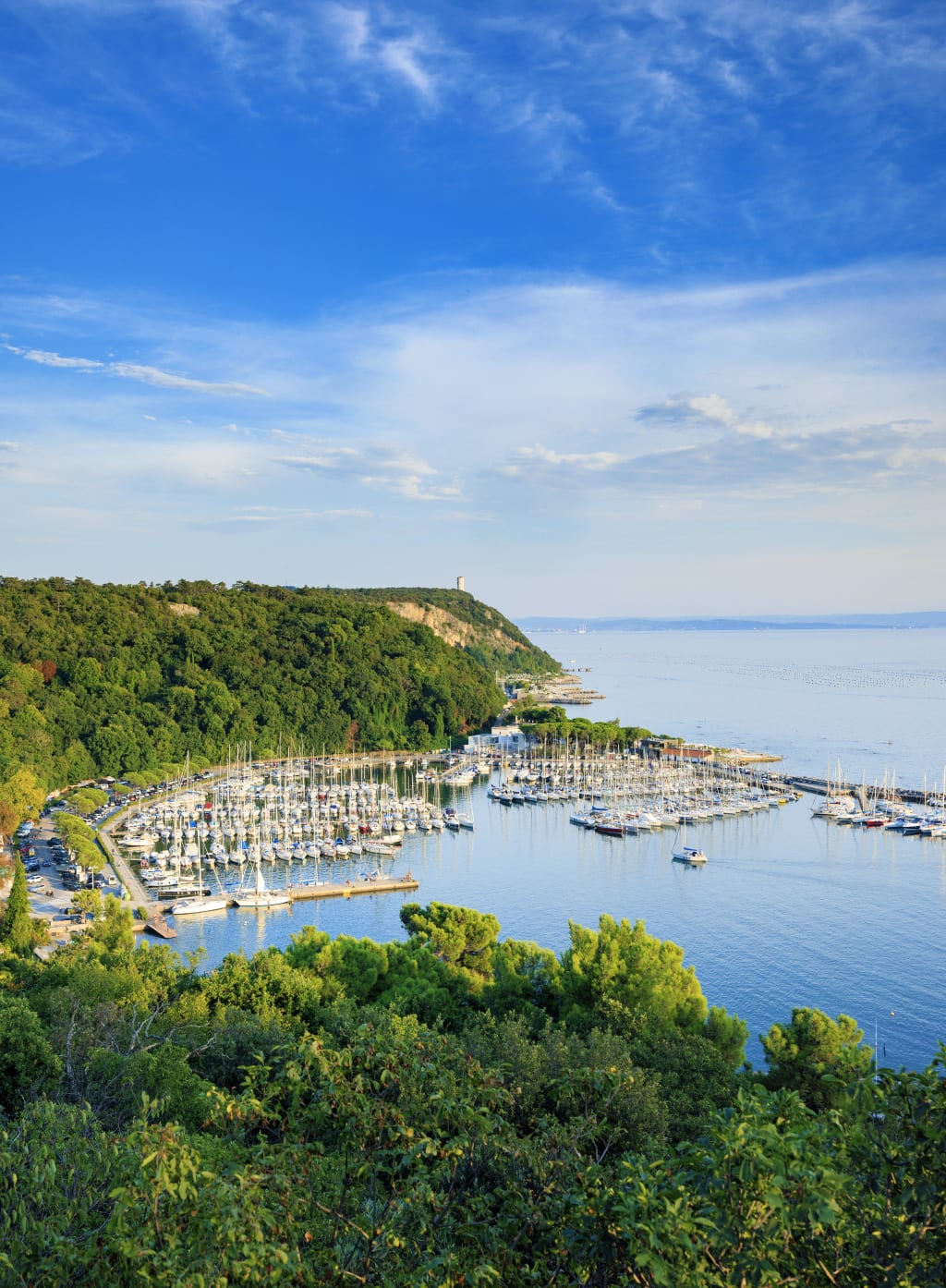
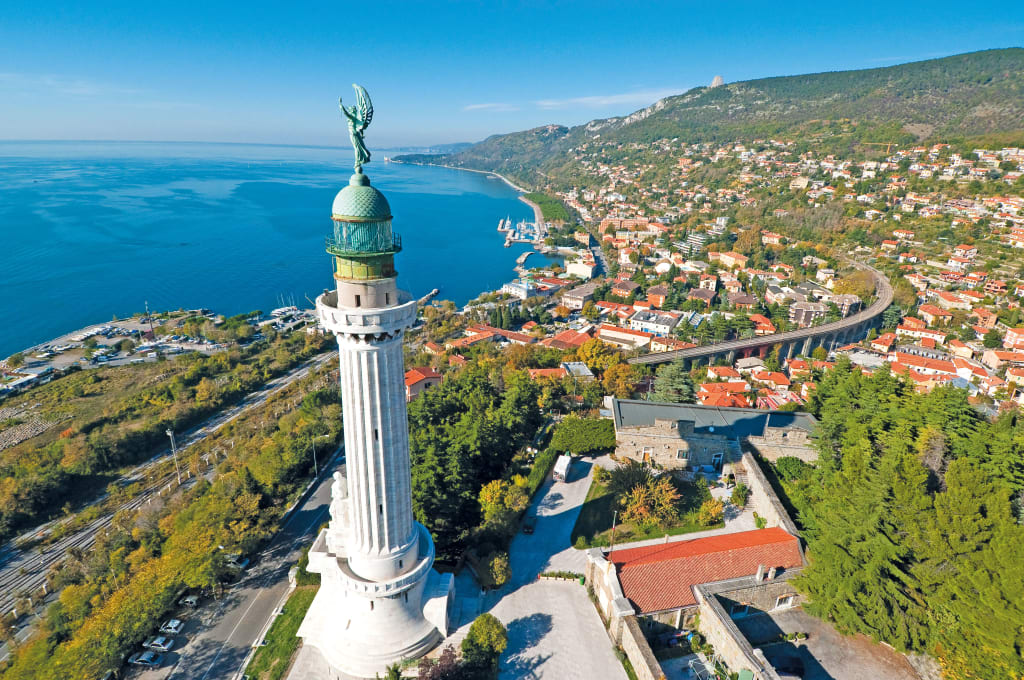
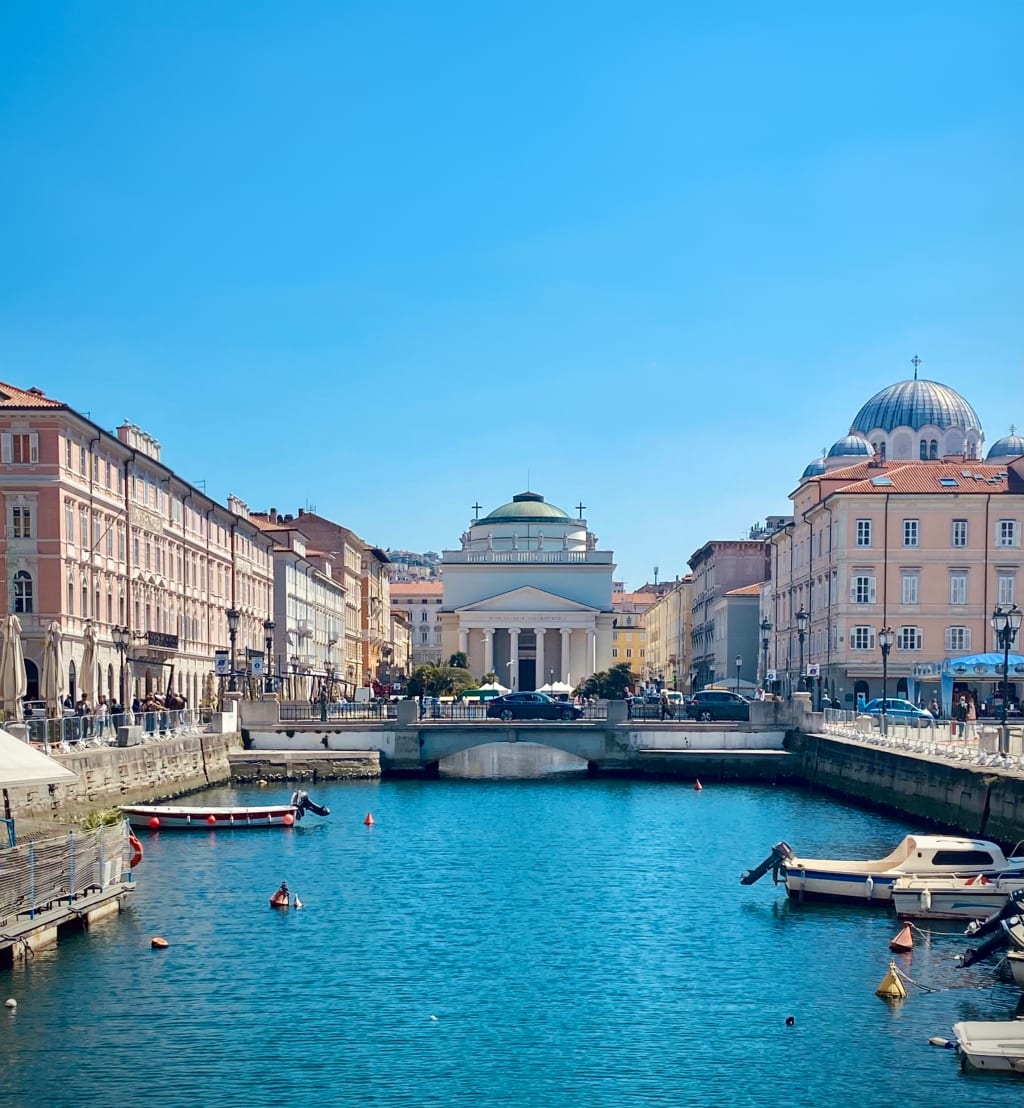
The last cycling day takes you from Grado to Monfalcone, where we take the train to reach Trieste, a bridge city between Western and Central Europe featuring both Mediterranean and Central European characteristics. The latter are most noticeable in the architecture and the wide avenues and squares. Trieste’s port was the main maritime outlet of the Habsburg Empire. The symbol of the city is the charming Piazza Unità d’Italia, the largest square in Europe overlooking the sea: it opens on one side to the Gulf of Trieste and is surrounded by elegant buildings. After a guided visit to the city, you return to Grado for the last dinner on board the Ave Maria Portegrandi all together.
1. Arrival in Grado and embarkation
Individual arrival in Grado, with boarding from 5:00 pm. At 6:00 pm, it is time for the welcome meeting over a refreshing drink. The onboard crew and your tour guide are ready to walk you through the tour and answer any questions. Grado is a city with ancient origins from the Roman era, once an important gateway to Aquileia. Its historic centre is a real gem, made of narrow streets, colourful fishermen’s houses and traces of its glorious past, like the Basilica di Sant’Eufemia with its mosaic floor, and the Basilica di Santa Maria delle Grazie, the city’s oldest church. After dinner, enjoy a first stroll through Grado’s historic centre.
2. Cycling to Monfalcone, then train to Trieste and a visit to the city
Today’s ride takes you from Grado to Monfalcone, where you take the train to reach Trieste, a bridge city between Western and Central Europe featuring both Mediterranean and Central European characteristics. The latter are most noticeable in the architecture and the wide avenues and squares. Trieste’s port was the main maritime outlet of the Habsburg Empire. The symbol of the city is the charming Piazza Unità d’Italia, the largest square in Europe overlooking the sea: it opens on one side to the Gulf of Trieste and is surrounded by elegant buildings. After a guided visit to the city, you return to Grado for dinner on board the Ave Maria Portegrandi.
3. From Grado to Marano Lagunare, through the countryside
Leaving Grado behind, this cycling stage takes you from the sea into the countryside. You follow the Isonzo River, scene of historic battles, passing the nature reserve at its mouth, home to grazing white Camargue horses. You then reach Aquileia, a Roman colony founded in 181 BC and now one of the most important archaeological sites in northern Italy: the Roman archaeological area and the basilica, which preserves extraordinary mosaics, have been declared a World Heritage Site. From here you continue past the medieval village of Strassoldo before arriving in Marano Lagunare, a fascinating town overlooking the lagoon, where the barge awaits you.
4. From Marano Lagunare to Caorle, through Brussa natural oasis by bike
Today’s ride begins in Marano Lagunare. Look out for “La Bilancia di Bepi”, a historic fishing stilt house on the Stella River. Then continue cycling towards Brussa, a wide natural oasis rich in biodiversity, among quiet golden dunes, dense pine forests and cultivated fields; you can also spot fishing valleys, lagoons and brackish reed beds of rare beauty. As you approach Caorle, you can already spot some large houses with thatched roofs: these are casoni, typical reed constructions used by local fishermen, a symbol of the tradition and culture of these lands, an authentic connection to the past. Caorle is a beautiful little seaside town, and its heart is undoubtedly the fishing harbour. Everything here seems built to honour and pray to the sea: the Church of the Madonna dell’Angelo, perched on the cliff, the round bell tower visible from afar, and the brightly coloured houses once home to local fishermen.
5. Local tasting and coastline cycling from Caorle to San Donà di Piave
Today you leave Caorle behind and cycle along the coast before turning inland along the Piave River. Just outside Caorle lies Ca’ Corniani, a rural gem and an example of land reclamation that has turned a lagoon landscape into a thriving agricultural estate. A little further on, the Fagiana farm is another fine example of the care given to this land: did you know that some excellent carnaroli rice is grown in the Venice area? You continue along the Piave, the river that was the undisputed protagonist during the First World War and has inspired countless songs, poems and stories, all the way to San Donà di Piave, where you can visit the MUB, the land reclamation museum that explains the story of this lagoon territory and the great land reclamation that began back in the mid-1800s.
6. From the mainland to the lagoon: Lio Piccolo, Punta Sabbioni and Murano
From San Donà di Piave, you reach La Barena in Lio Maggiore, a farmhouse that since 1928 has carried on the agricultural tradition of the northern lagoon for generations, before a short boat transfer to Notturno, in Lio Maggiore. You then cycle through the small islands and canals of Lio Piccolo, a magical lagoon hamlet made up of vegetable gardens and fishing valleys, farmhouses, a beautiful square, a palazzo, a small church and a bell tower: it seems hard to believe that just a couple of kilometres away lies one of Italy’s most famous Adriatic beaches. Continuing on to Punta Sabbioni, the tip of the Cavallino-Treporti coastline that separates the Lagoon from the sea, the Ave Maria Portegrandi carries you on to Murano, where you have the opportunity to visit a historic glassworks, complete with a demonstration of the centuries-old art of glassmaking. From here you sail on to Venice, where the barge moors for the night.
7. Venice's lagoon: Burano and the Venetians' vegetable garden on Sant'Erasmo
After breakfast, you head out by boat to the colourful island of Burano, famous not only for its brightly coloured houses but also for its prized handmade Burano lace. From here you reach the island of Sant’Erasmo, which is second only to Venice in size and also known as the Venetians’ vegetable garden. Alongside vegetables and various fruit tree cultivations, there are also vineyards, producing a white wine aptly named Orto di Venezia (a tribute to the island). But the true star of the island is the purple artichoke of Sant’Erasmo, a prized crop harvested in spring that also decorates the island in summer with its wonderful purple blooms. Enjoy some time at spiaggia del Bacan, the beach where locals usually go, before returning to the barge for the evening.
Comfort Gold
- comfort Gold
- en-suite bathroom and shower
- air conditioning in the whole barge
- WiFi available in common areas
- 12 cabins
- 24 guests in low beds


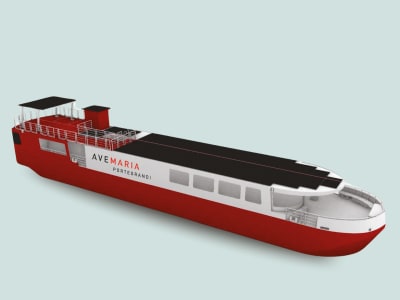
Ave Maria Portegrandi
- comfort Gold
- en-suite bathroom and shower
- air conditioning in the whole barge
- WiFi available in common areas
- 12 cabins
- 24 guests in low beds
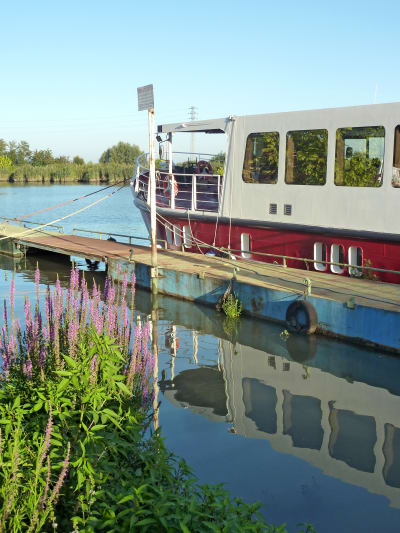
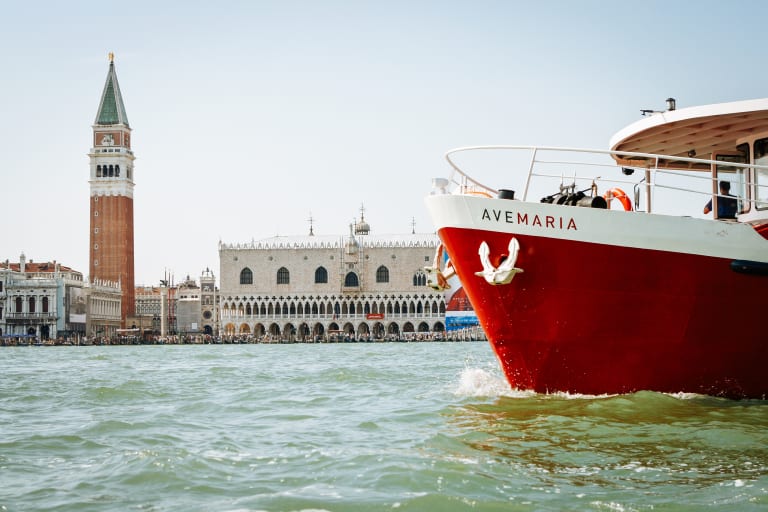
An elegant, latest-generation electric river barge, built in Italy and designed to navigate the little-used waterways between Mantua, Venice, and Grado. It combines technological innovation with environmental awareness: its 36 kWp photovoltaic panels and 340 kWh batteries make the use of a diesel generator almost unnecessary, promoting silent, low-emission navigation. View more details
Cabins
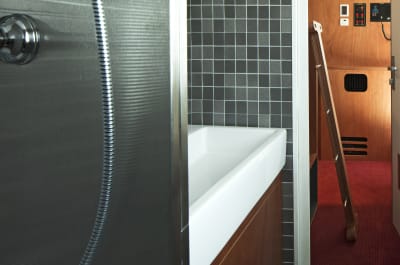
- 12 dbl/twin cabins 11 sq.m (B, C)
The cabins can be arranged with either a double bed or two separate beds.
Possible additional bunk beds in 4 cabins.
The cabins are luminous, spacious, and functional, thanks to the carefully designed furnishings.
Features
- Comfortable low beds (2.00 m x 0.80 m)
- Bathroom with shower, heated towel rail, and two sinks (one in the bathroom and one in the cabin)
- Large windows
- Individually controlled air conditioning
- Safe deposit box
- Ample space under the beds for the luggage: H36cm x W112cm x D80cm
Common areas
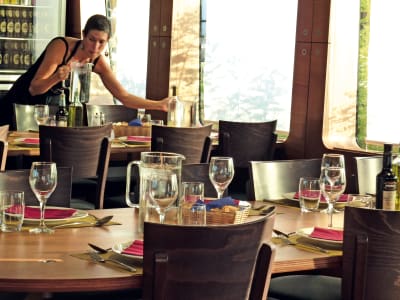
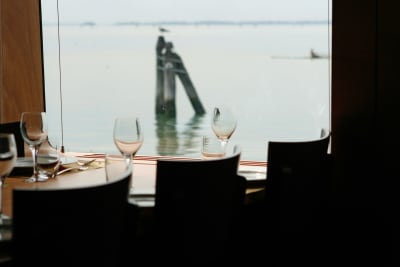
- Cozy and bright restaurant hall with large panoramic windows offering a 270° view
- Relaxation area with a coffee, cappuccino, and hot chocolate machine available any time of the day, a wide selection of board games, books, and travel guides, an 80″ multimedia screen, and free WiFi
- Sundeck to enjoy sailing and outdoor dining






Departures Gold
We are updating the itinerary, price and departures for this tour. Request info.
Accommodation
- 7 nights accommodation
- Hair dryer (1 per cabin)
- Sheets and towels
- Courtesy kit with eco solid soaps (hand + body + shampoo) and shower cap
- Mid-week cabin cleaning service and towel change
Meals
- 7 breakfasts
- 6 self-made packed lunches
- 6 dinners
- Welcome drink
- Afternoon snack
- Coffee, tea, and other hot drinks on board
- Still and sparkling water dispenser (room temperature or cold water)
- Ice dispenser
If you are vegetarian/vegan, gluten-intolerant or allergic to some specific ingredients/substances please indicate it at the moment of booking.
A supplement applies for gluten-free, dairy-free, lactose-free or vegan diets (to be paid in advance).
Once on board, make sure that the kitchen staff is aware of your allergies, in order to avoid unpleasant situations.
Tour leader
- English speaking tour leader within an international group.
- This tour offers the choice of cycling alone using our App or with the whole group following the tour leader
The tour leader:
- holds a daily briefing for both guests who chose the self-guided version of the tour and those who chose the guided version
- leads the tour on bike, coordinates the participants and knows how to intervene in the event of unforeseen events (guided version)
- is available to advise guests traveling independently (self-guided version)
Tour information
Before your departure, you will receive an email from us with the digital information material. It contains:
- a link to download the App including maps, roadbook, points of interest and GPS tracks (you can use the App offline, too)
- a link to download the tour information material in PDF (Tour notes and Final tour details)
Assistance
In the Final Tour Details you will find the contact phone numbers you can call during the tour in case of emergency.
Transfer
- All transfers indicated in the program
Additional services included
- Welcome briefing
- Some short walking tours
- Visit to local farms with tasting
- Visit of a historic glass factory on Murano island
- Harbour charges
Cancellation policy
In the event of unavoidable and extraordinary circumstances occurring at the place of destination or in its immediate surrounding area and having a substantial impact on the execution of the package or on the transport of travellers towards the destination, the traveller has the right to withdraw from the agreement before using the package, without paying withdrawal costs.
In all the other cases of withdrawal from the travel agreement, the traveller is always required to pay a withdrawal penalty. Read more
Withdrawal penalties
- 20% up to 84 days prior to departure date
- 40% from 83 to 42 days prior to departure date
- 60% from 41 to 28 days prior to departure date
- 90% from 27 to 1 day prior to departure date
- 100% no-show
Round trip
Travel to and from start and finish points not included
To pay on the spot
- 1 dinner (day 2)
- Beverages on board
- Ticket for public transportation in Venice and lagoon
(We suggest the ACTV 48h-ticket, 35 €) - Access Fee for the ancient city of Venice (5-10€/day per person; only on selected days and from 8.30am to 4.00pm.)
- Tips
The amount is up to your discretion, we suggest 5-7 % of the cost of the trip.
Rental bikes and accessories
You can rent Girolibero bikes and accessories.
The helmet is included, but you need to book it in advance.
Own bicycles are not allowed on board.
Additional excluded services
- Accommodation in double cabin single use
- Everything not mentioned in the section “included”
Practical information
How to get there
Direction Venice-Grado
Venice is the starting point of the tour to be reached independently.
By plane
Venice is connected with the following airports: Venice: 10 km, Treviso: 30 km, Verona: 110 km, Bergamo: 240, km Milan: 310 km.
From Venice airport (VCE):
- water bus Blue Line Alilaguna until the stop “Zattere”. From here vaporetto Line 2 until the stop “Redentore”
- alternatively, Fly Bus ATVO shuttle service to reach Venice Piazzale Roma (approx. 20 min). From here vaporetto Line 2 or 4.1 until the stop “Redentore”
From Treviso airport (TSF):
- ATVO shuttle service to Venice Piazzale Roma (approx. 70 min)
- alternatively, Airlink shuttle bus from the airport to Treviso train station (approx. 10 min). From here train to Venice Santa Lucia train station (approx. 40 min) and vaporetto Line 2 or 4.1 until the stop “Redentore”
From Verona airport (VRN):
- Airlink shuttle bus until Verona Porta Nuova train station (approx. 15 min). From here direct train to Venice Santa Lucia (approx. 1.30-2 hours) and vaporetto Line 2 or 4.1 until the stop “Redentore”
From Bergamo airport (BGY):
- shuttle bus from airport to Brescia train station (approx. 1 hour). From here train to Venice Santa Lucia with change in Verona Porta Nuova (approx. 1.40/2.5 hours) and vaporetto Line 2 or 4.1 until the stop “Redentore”
From Milano Malpensa airport (MXP):
- train from the airport to Milano centrale (approx. 1 hour). From here train to Venice Santa Lucia (direct connection or with change in Verona Porta Nuova, approx. 2.30/3.5 hours) and vaporetto Line 2 or 4.1 until the stop “Redentore”
By train, the low-impact choice
Venezia Santa Lucia is the closest station.
You can use Trainline to compare timetables, prices, and international rail connections, integrating the main European operators.
For an overview of prices, airlines and flight schedules we suggest rome2rio.com or Google Maps, which also show options via train or bus, even for the last mile. For reliability and security, we recommend purchasing your flight on the official website of your chosen airline.
Documents
If you are a citizen of the EU or of a Schengen country – i.e. most EU countries and four European Free Trade Association (EFTA) member states, Iceland, Liechtenstein, Norway and Switzerland – you are free to travel to other Schengen countries without having to go through border controls.
Even if you don’t need a passport for border checks within the Schengen area, it is still always highly recommended to take a passport or ID card with you.
If you are a non-EU national wishing to visit or travel within the EU, you will need a passport:
- valid for at least 3 months after the date you intend to leave the EU country you are visiting,
- which was issued within the previous 10 years
- and possibly a visa
You should apply for a visa from the consulate or embassy of the country you are visiting. If your visa is from a Schengen area country, it automatically allows you to travel to the other Schengen countries as well.
Do not forget your travel, health and/or car insurance documents.
For further information visit Your Europe official website.
Do not forget your travel, health and/or car insurance documents.
Always thoroughly check the document you travel with: expiration date and integrity.
Registration of documents is compulsory at check-in in hotels.
Language
The official language is Italian.
Italy is in the Central European Time (CET) Zone, 1 hour ahead of Greenwich Mean Time zone (GMT), and observes Daylight Saving Time.
Internet, telephone, electricity
Internet and telephone
The international phone prefix for Italy is +39.
With a European SIM card, roaming is free throughout Europe. Please check your rates with your mobile/internet provider before departure.
If you’re travelling from outside Europe, we recommend purchasing an eSIM before departure so you’re connected as soon as you land.
Girolibero is a partner of Airalo: follow this link to purchase an eSIM with the data plan that best suits your needs, at a 10% discount. Please note that, depending on your destination, only data-only eSIMs may be available (no call or SMS plans) — in that case, you can purchase a physical SIM card locally for calls and texts.
You can also use this discounted eSIM link for future trips.
Emergency telephone numbers
112 – Common Emergency Number. This is the European emergency number which can be called in any emergency from any telephone (landline and mobile phone). Calls are free.
113 – Police Help Number
115 – Fire Department
118 – Medical Emergencies
Electricity
The Italian electrical net is 220V – 50Hz.
Sockets are Schuko bipolar and comply with European regulations. In most hotels you will find adaptors for different types of plugs.
Currency
The currency in Italy is the euro (€).
Equipment and clothing
Luggage
- Bags instead of suitcases (space on board is limited)
Cycling essentials
- handlebar mobile phone holder (we recommend the SP Connect™ system: if you buy it online you get a 20% discount using the code TRAVEL20)
- a power bank
- your own reusable water bottle (the most sustainable choice)
- comfortable shoes with stiff soles
- padded cycling shorts
Personal equipment
- basic first aid kit which includes sticky bandages, gauze, and low-grade disinfectant
- sunglasses for eye protection
- protective sun lotion
- insect repellent
Clothes
- light weight waterproof/windproof tops
- leggings and long-sleeved tops for cooler mornings or evenings
- small close-fitting rucksack to carry small items during the day while cycling
- swimsuit
- clothes to cover your shoulders when you visit churches
Sustainable traveler
To travel with respect for the environment, the places, and the people who welcome us:
- always ask permission before photographing people
- dress appropriately when visiting places of worship
- leave no trace and do not litter along the way
- refill your water bottle at drinking water fountains (you can use Mapy to find them)
- do not collect "souvenirs" from protected natural areas or archaeological sites
- stay on marked trails, respect wildlife and take care of the nature around you
- avoid wasting water and energy, precious resources for everyone
- respect the rules and spaces of the accommodations that host you
- reduce your ecological footprint while travelling and consider offsetting the emissions from your journey, here's how
Read carefully
Tour programme variations
- Due to organisational reasons, weather conditions or provisions issued by local authorities, the itinerary may be subject to some changes before and/or during the holiday.
- Issues with high and low water, as well as logistic obstacles such as officially ordered – previously not announced – repair work on locks or bridges can modify some of the daily stretches or overnight stays and may even request a transfer by bus. These decisions are only taken by the barge’s captain.
Travel insurance
- It is advisable to take out an insurance policy against expenses arising from cancellation of the tour package, accidents, luggage (loss and damage), as well as a contract covering expenses in case of repatriation. Insurance policies are not included in the tour package offered by the operator.
Other travelers also viewed
Browse the suggestions to discover other destinations and trips similar to this holiday.
Need advice? We are here to help
Contact us





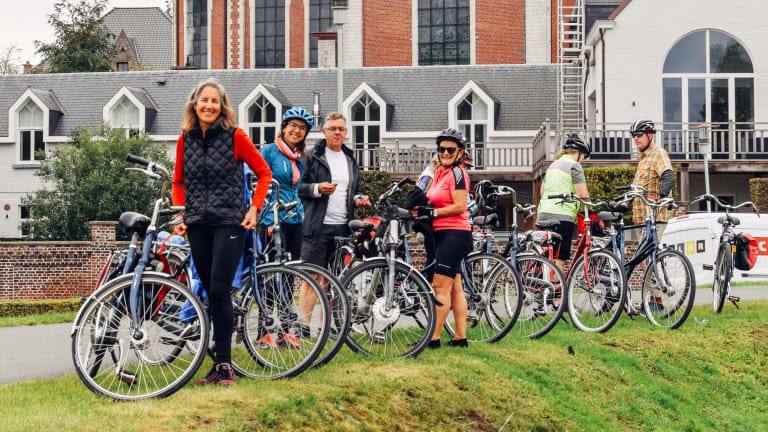
Discover more
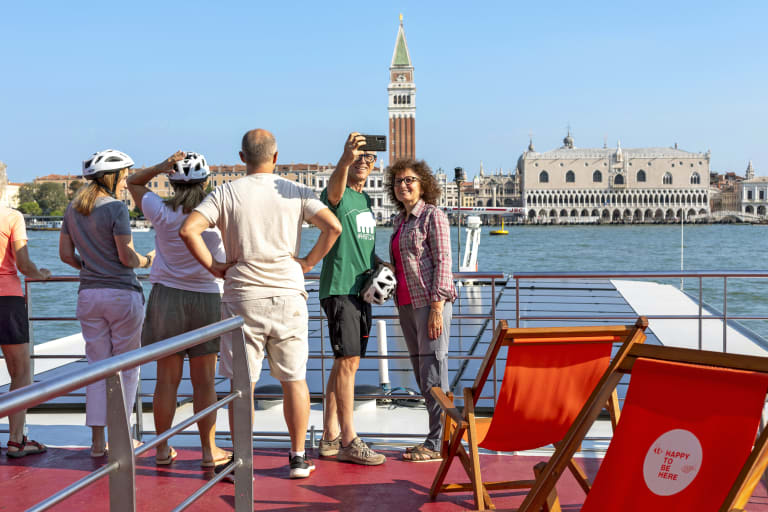
A unique travel experience
The only itinerary in Italy that combines easy cycling through art cities, lakes, and hidden gems with overnight stays aboard a riverboat
Bike and barge in Italy, how it works
Receive our newsletter
Loving what you have read so far? Stay in the loop and get free travel tips, ideas, and news from us!
Yes, sign me up!